A window handle that spins freely, a sash that refuses to latch, a lock you haven’t been able to turn for months: these faults tend to be ignored far longer than they should be. Aluminium window handle repair sits in that awkward category of home maintenance that feels minor right up until it isn’t. The hardware on your windows is load-bearing in the truest sense. It holds the sash in position, engages the lock, and is the last line of defence between your home and an open gap. Understanding what has actually failed, and whether it can be fixed or needs to be replaced, is the starting point for getting it right.
Table of Contents
The Spinning Handle That Latches Nothing

This is the most reported aluminium window hardware complaint. You turn the handle, it rotates without resistance, and the window stays exactly where it is. The sash doesn’t pull closed, the lock doesn’t engage, and the whole operation feels disconnected.
What has usually happened is straightforward. The spindle inside the handle has sheered, worn smooth, or the square drive no longer grips the gearbox beneath. On older windows, this is almost always wear: years of daily operation gradually strip the internal drive until there is nothing left to turn. On newer windows, the culprit is more often incorrect installation, a handle torqued at the wrong angle, or a grade of hardware that was never matched to the sash weight it was asked to move.
Can it be repaired?
In most cases, yes. If the gearbox itself is intact and undamaged, a direct handle replacement is sufficient. The handle is a consumable component, designed to be swapped out. The important variable is compatibility: the spindle length, the backset, and the fixing centres must match your existing gearbox. Fitting an incompatible handle creates the same spinning problem you started with, so sourcing a matched part matters.
The Stiff Handle That Won’t Turn at All
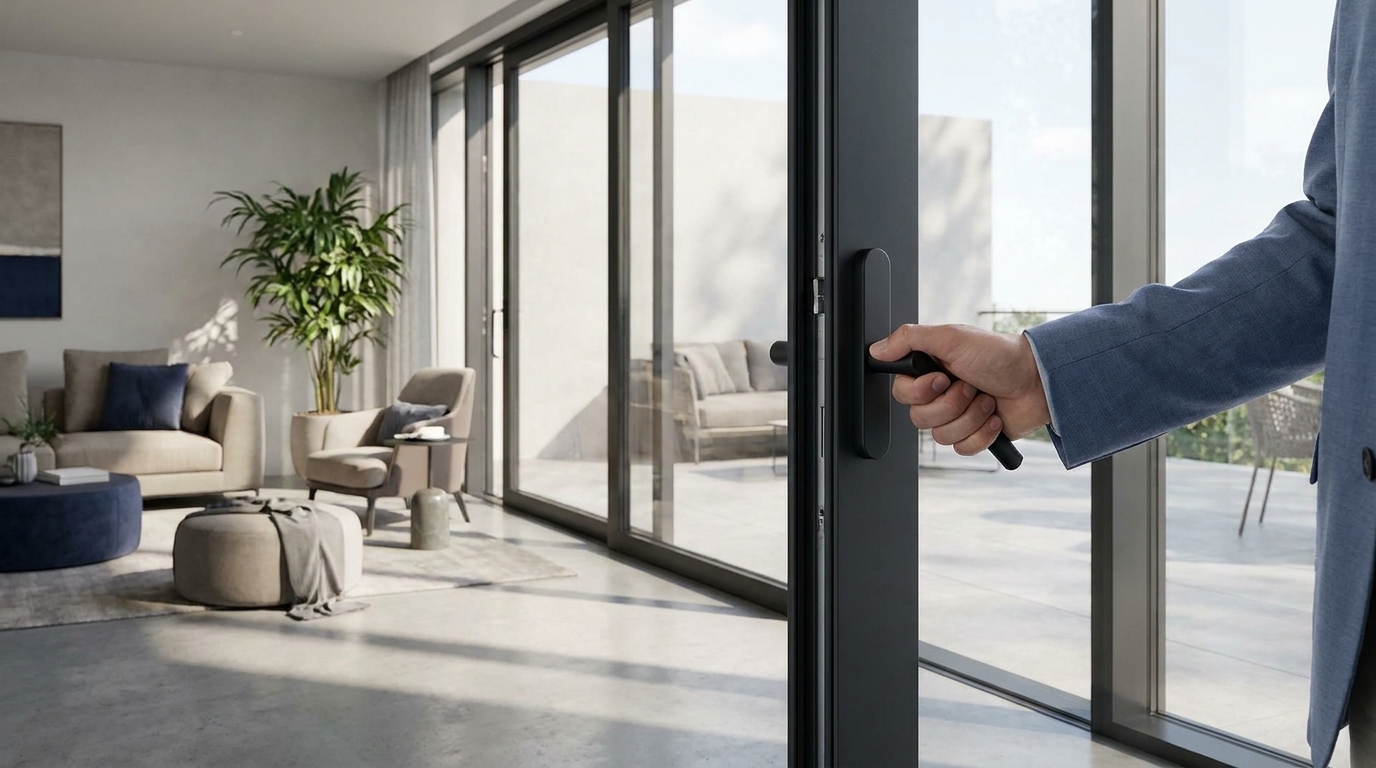
The opposite problem is equally common and often more misdiagnosed. The handle is immovable, or requires significant force to operate. Homeowners frequently assume the lock is broken when the actual fault lies elsewhere.
Stiffness has three main causes. The first is corrosion or debris in the gearbox, particularly in coastal or high-humidity environments where salt air accelerates deterioration inside the mechanism. The second is sash misalignment: if the frame has shifted slightly, the locking points are no longer meeting squarely, and the handle is working against the frame itself rather than engaging a keeper. The third is a failed multipoint locking rod, common in espagnolette-style systems, where the rod has bent or the carrier has cracked and is now binding inside the frame cavity.
Can it be repaired?
It depends on the cause. Gearbox corrosion sometimes responds to penetrating lubricant and a thorough service, but a corroded gearbox that has seized internally will need replacement. Misalignment is a frame and installation issue: the hardware is fine, but the geometry is wrong, and no amount of new hardware will solve it without addressing the root cause. A bent espagnolette rod is a hardware replacement job, and it is not especially complicated provided the correct rod profile and length are sourced.
Broken Window Lock Repair: Espagnolette Systems
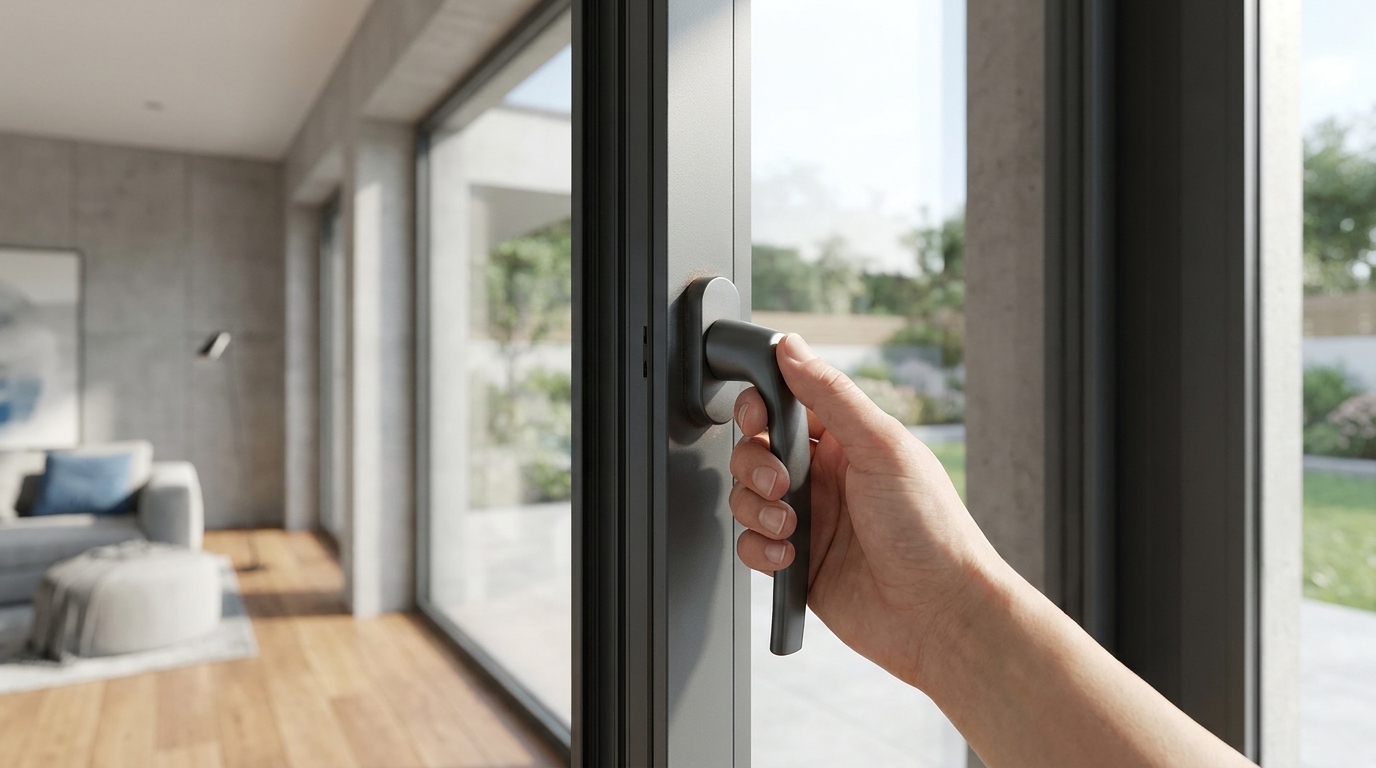
Espagnolette locks are the multipoint locking systems found on most modern aluminium casement and tilt-and-turn windows. A single handle operation drives multiple locking points simultaneously, which is why they offer better security than a simple single-point latch. When they fail, they tend to fail in one of three ways: the gearbox cracks, the locking rod deforms, or the keeps (the receivers in the frame) become misaligned.
Broken window lock repair on espagnolette systems is a job that rewards precision. The gearbox is the heart of the system, and replacements need to match the existing hand (left or right), the case dimensions, and the backset exactly. This is not a job for a generic off-the-shelf part. The rod length is determined by the sash height and must be cut or supplied to match. Getting this wrong means the locking points engage at the wrong positions, leaving gaps that look closed but aren’t.
A cracked gearbox is not repairable. It needs to be replaced, and when it is replaced correctly with a compatible part, the system performs as well as new. This is an important distinction: the window itself is not the problem. The hardware is. Aluminium frames are exceptionally durable, and in the vast majority of cases, the frame will outlast several generations of hardware.
Snapped Friction Stays and Dropping Sashes
A friction stay is the scissor-arm mechanism that holds a casement or awning window open at a chosen angle. When it fails, the sash either drops immediately on opening or will not hold its position. A sash that falls under its own weight is a hand injury waiting to happen, particularly on larger openings.
Friction stays fail for several reasons. The friction pads wear over time and lose their grip. The pivot points corrode and seize, transferring stress to the arm itself until it snaps. On aluminium windows, an undersized or incorrectly rated stay is a common culprit: a stay specified for a lightweight sash will fail prematurely if fitted to a heavier double-glazed unit. This happens more often than it should on budget installations where hardware grade is not properly matched to glazing weight.
Window latch replacement and stay compatibility
Replacing a friction stay requires matching several specifications: the arm length, the fixing pattern, the opening angle, and the weight rating. Modern replacement stays are widely available and can be retrofitted to most aluminium profiles without modification to the frame. If your window has been upgraded from single to double glazing at some point, there is a reasonable chance the original stays were never updated to suit the new sash weight, which explains premature failure.
Restricted Opening Devices That No Longer Restrict
Restricted opening devices (often called child safety restrictors) limit how far a window can open, typically to around 100mm. They are a building regulation requirement in certain applications, particularly above a given floor height. When they fail, the window opens fully without resistance, defeating their purpose entirely.
These devices fail through the same mechanisms as friction stays: wear, corrosion, and incorrect specification. A restrictor that has been repeatedly forced beyond its rated stop point will eventually give way. Replacement is straightforward, but the replacement part must be rated to the correct load and opening limit. A restrictor that looks right but is rated for a lighter application provides a false sense of security.
I Don’t Know What Brand or Model My Windows Are
This is the question that stops most people from acting. They know the handle spins or the lock won’t engage, but they have no idea who made the windows, what profile system is used, or where to begin sourcing a compatible part. It is a genuinely common situation, particularly in homes where the windows were installed by a builder rather than directly by the homeowner.
The reassuring answer is that you do not need to know the brand. A clear photograph of two things is almost always sufficient to identify compatible hardware: the aluminium profile itself (a close-up of the frame corner showing the section shape) and the existing hardware (the handle, gearbox, or stay in situ). These two images give a specialist enough information to match the spindle dimensions, the case size, the fixing centres, and the system type.
The key is photograph quality. Shoot in good light, include something for scale if possible, and capture the hardware from more than one angle. If the gearbox is accessible, a photo of the brand marking or any numbers stamped on the body is a bonus, but it is rarely essential. Inso’s team works with a wide range of profile systems and hardware suppliers, and matching from photographs is a routine part of the process. You can reach the team directly through the contact page to send through your images and get a compatibility assessment.
Aluminium Window Handle Repair or Full Window Replacement
There is a version of this conversation that ends with someone telling you the whole window needs to come out. Sometimes that is true. More often, it is not.
Aluminium frames are built to last decades. The extrusions do not rot, they do not warp under moisture, and they do not degrade the way timber does. What wears out is the hardware: the handles, gearboxes, stays, and locks. These are all serviceable components. If the frame is sound and the glazing is intact, aluminium window handle repair and hardware replacement is almost always the more sensible and more cost-effective route.
Full window replacement makes sense in specific circumstances: the frame itself is damaged or structurally compromised, the glazing specification is badly outdated and the window is a significant thermal weak point, or the opening configuration no longer suits the space. In all other cases, targeted hardware replacement restores full function at a fraction of the cost of a new unit.
If you are unsure where your windows sit on this spectrum, browsing the aluminium windows range gives a useful reference point for what current hardware and glazing standards look like, which can help you assess whether your existing frames are worth servicing or whether an upgrade makes more sense.
A Non-Latching Window Is a Security and Insurance Risk
This point deserves to be said plainly. A window that does not latch is an open window, in every sense that matters to a burglar and to an insurer.
Most household insurance policies include a condition that windows and doors must be properly secured when the property is unoccupied. A spinning handle or a failed lock does not satisfy that condition. If a claim arises following a break-in and an assessor determines that a window was not latching correctly, the insurer has grounds to reduce or reject the claim. This is not a hypothetical edge case; it is a standard policy condition that many homeowners are unaware of until it is too late.
Beyond the insurance question, a failed lock removes a physical barrier. Aluminium windows with functioning multipoint espagnolette systems offer meaningful resistance to forced entry. A window that looks closed but is not locked offers none. The visual deterrent remains, but the actual resistance does not.
A spinning handle or a broken latch is not a cosmetic issue. It is a live security vulnerability, and the longer it remains unfixed, the longer that vulnerability exists.
Fixing the Problem the Right Way
Most aluminium window hardware failures are fixable with the right part and the right diagnosis. A spinning handle can usually be resolved with a matched handle replacement. A failed espagnolette lock needs a correctly specified gearbox and rod. A dropping sash needs a friction stay rated to the actual sash weight. A restrictor that no longer holds needs a load-rated replacement.
What all of these have in common is that they require the correct part, not just any part that fits loosely. Generic hardware that is close but not compatible creates new problems on top of the original one. Sourcing correctly matched components, particularly for older or less common profile systems, is where specialist knowledge pays for itself.
If you are dealing with any of these faults and are not sure where to start, the most useful first step is to photograph the profile and the existing hardware, then get in touch with the Inso team. For context on what a full hardware review or new installation involves, the Inso blog covers a range of practical guidance on aluminium windows, doors, and hardware maintenance.
Do not leave a non-latching window on the list of things to get around to. The fix is usually simpler than you expect, and the cost of leaving it is higher than it looks.