A sliding door that refuses to cooperate is one of those problems that starts small and escalates quickly. What begins as a little resistance in the morning becomes a full two-handed shove by winter, and by then the frame is stressed, the rollers are damaged, and what could have been a straightforward sliding door repair starts looking more complicated. The good news is that most aluminium sliding door faults follow predictable patterns, and once you know what the symptom means, you know exactly what needs to happen next.
This guide works through the five most common failures one by one. For each one, you will find the root cause explained in plain language, an honest assessment of whether it is a job for a Saturday afternoon or a specialist, and a rough idea of what repair versus replacement actually costs.
Table of Contents
Symptom One: Grinding or Scraping Along the Track

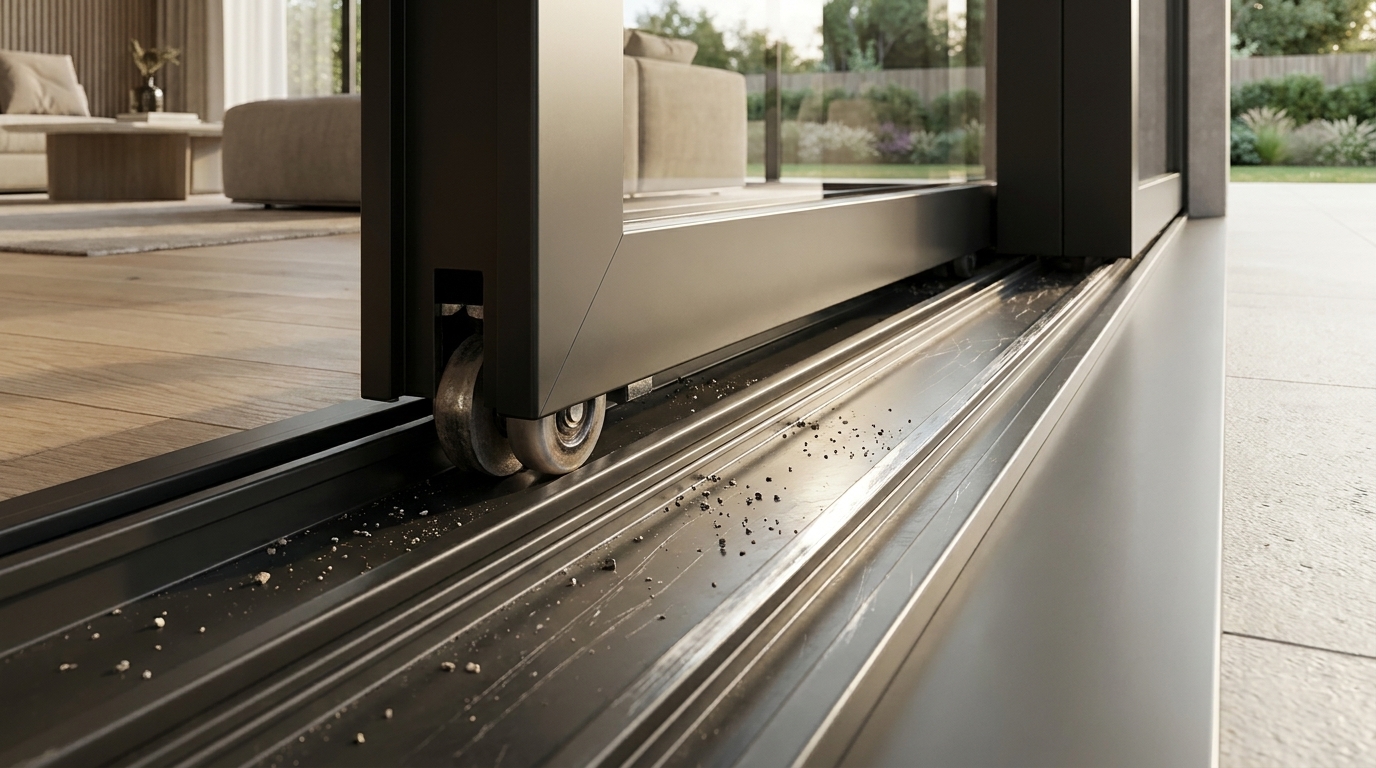
That metallic dragging sound as the door moves is rarely just dirt. It usually means one of two things: debris has compacted inside the track channel, or the rollers at the base of the door have worn down to the point where the door frame is making direct contact with the track itself.
The root cause
Aluminium tracks are designed with a small channel that the roller wheel sits inside. When grit, sand, or hardened grease fills that channel, the roller cannot spin freely and begins to slide instead of roll. That friction grinds the track surface and flattens the roller wheel at the same time, turning a cleaning job into a roller replacement.
DIY or specialist?
Start with a thorough clean. Remove the door (most aluminium sliding doors lift out of the track when tilted slightly), vacuum the channel, and scrub with a stiff brush and warm soapy water. Dry it completely and apply a silicone-based lubricant – not WD-40, which attracts more dust. If the grinding continues after that, the rollers have worn flat and need replacing. That is a specialist job: the wrong roller diameter will put the door at the wrong height and create new problems.
Symptom Two: Sliding Door Off Track or Dropping at One Corner

A door that feels heavier on one side, drags at the bottom corner, or visibly tilts when open has almost certainly dropped off its adjustment. This is one of the most common aluminium sliding door problems, and it is also one of the most misdiagnosed.
The root cause
Aluminium sliding doors sit on adjustable roller carriages. Those carriages have small set screws that control the height of each corner independently. Over time, vibration from daily use, building settlement, or simply age causes the screws to shift, and the door drops unevenly. In more serious cases, the top guide rail has worked loose, allowing the door to swing outward at the top and creating a gap that gets worse every time the door is opened hard.
DIY or specialist?
Roller height adjustment is technically accessible: there are small holes along the bottom of the door frame that give access to the adjustment screws, usually requiring a hex key or a flat-bladed screwdriver. However, getting both corners level without taking the door out and measuring properly is harder than it looks, and an uneven adjustment puts uneven load on the rollers. If the top guide is loose, do not attempt to re-fix it yourself – the guide carries real structural load and needs to be reset correctly. Send Inso a photo of the gap and the team can usually confirm the fault type within hours.
Symptom Three: Rollers Worn Flat
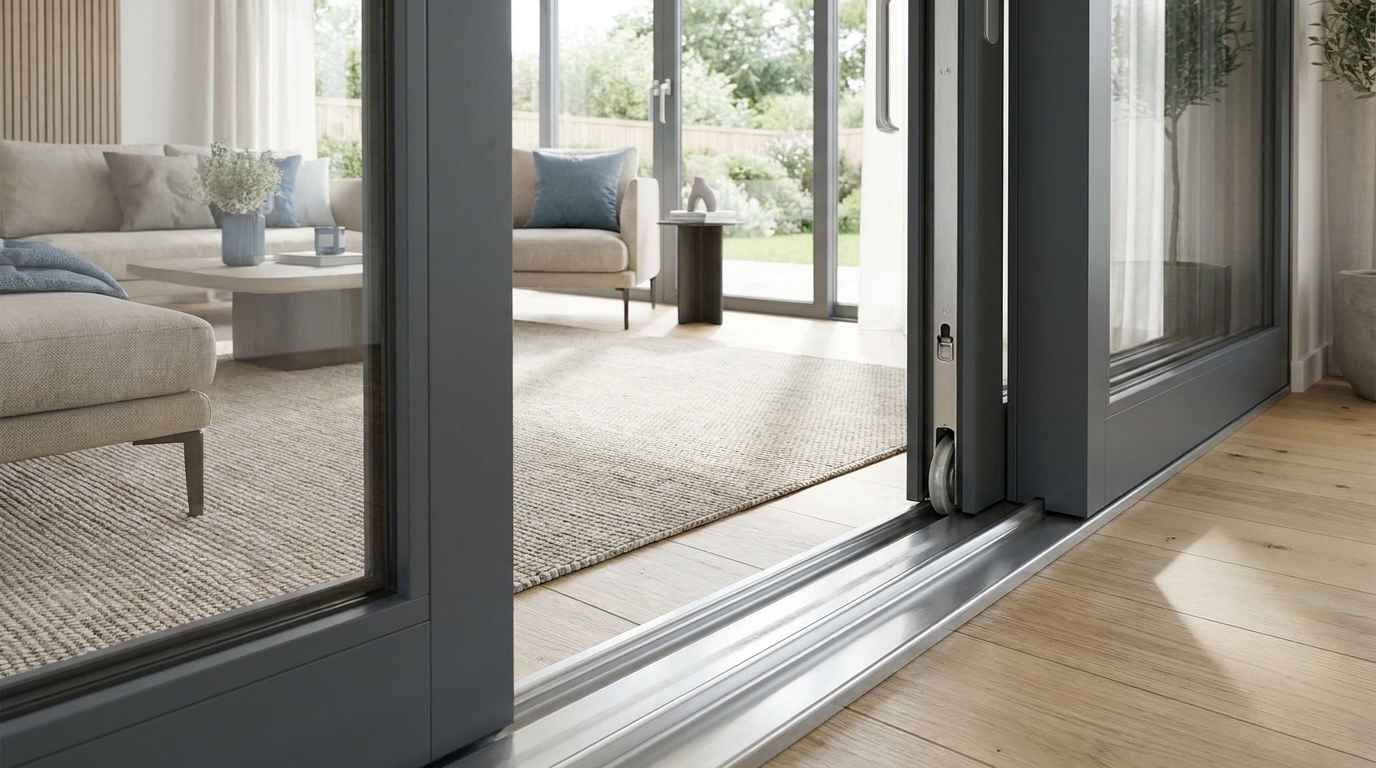
Flat-spotted rollers are the single most common cause of a patio door sticking fix call. The door still moves, but it takes real effort, and there is often a rhythmic bump or judder as each flat spot contacts the track.
The root cause
Roller wheels are typically nylon or steel. Nylon rollers are quieter but wear faster, especially in homes near the coast where salt-laden air accelerates the degradation of the bearing inside the wheel. Steel rollers last longer but are more susceptible to corrosion if the protective coating breaks down. Either way, once the wheel deforms, no amount of lubrication or track cleaning will restore smooth movement.
DIY or specialist?
Roller replacement is a specialist repair. The replacement wheel must match the original diameter exactly, the bearing rating must suit the weight of the door, and the carriage that holds the roller often needs inspection at the same time. Inso carries replacement roller assemblies compatible with most aluminium sliding door systems on the South African market, regardless of who originally manufactured the door. If you can photograph the bottom of the door panel and the track profile, that is usually enough information to identify the correct part before the technician arrives.
Symptom Four: Handle Spins Without Latching
A handle that turns freely but does not engage the lock is a security problem before it is a convenience problem. This symptom deserves prompt attention.
The root cause
Most aluminium sliding door handles connect to a multi-point locking mechanism via a spindle. When the spindle shears, strips, or works loose from the cam inside the lock body, the handle rotates without transmitting any movement to the latch. This can happen through normal wear on a heavily used door, or it can follow a forced entry attempt where the lock absorbed impact it was not designed for.
DIY or specialist?
Handle and spindle replacement is a manageable DIY task if the lock body itself is undamaged: remove the two screws holding the handle roses, withdraw the handle, replace the spindle, and test the new handle before refitting. The complication is sourcing a matching handle in the correct backset size. If the lock body is damaged – if the multi-point mechanism no longer throws its bolts even when operated manually – that is a specialist repair. Do not leave the door in service with a non-functioning lock. A temporary security fix while you wait for parts is worth considering: a track block cut from timber and placed in the floor channel will prevent the door from sliding open from outside.
Symptom Five: Drafts, Rattling, or Water Getting In
Gaps around a sliding door are both a comfort issue and a maintenance issue. Water ingress through a door frame causes timber subfloor damage, corrosion of fixings, and mould growth behind skirting boards. Aluminium itself does not corrode in the same way, but the surrounding structure does.
The root cause
There are three common sources. First, the pile (the brush seal along the door edge) compresses and loses its effectiveness after years of use. Second, the door has dropped or shifted out of square so that it no longer sits flush against the frame seal when closed. Third, the frame itself has moved slightly relative to the wall opening, breaking the seal between the frame and the brickwork.
DIY or specialist?
Pile replacement is a DIY job: the old pile pulls out of its groove and new pile presses in. It is sold by the metre and costs very little. If the gap persists after replacing the pile, the alignment is the issue, and you are back to roller and frame adjustment. Frame-to-wall seal failure, where the gap is between the aluminium frame and the surrounding brickwork, needs a specialist assessment because it may indicate building movement that affects more than just the door.
Repair or Replace? A Straightforward Cost Comparison
One of the most common questions Inso hears is whether it makes more sense to repair a struggling door or simply replace it. The table below gives a realistic picture for a standard residential aluminium sliding door.
|
Repair Type |
Typical Cost Range (ZAR) |
Expected Outcome |
|---|---|---|
|
Track clean and lubrication |
R 350 – R 700 |
Smooth operation restored if rollers are intact |
|
Roller replacement (pair) |
R 800 – R 1 800 |
Like-new movement; extends door life by many years |
|
Handle and spindle replacement |
R 600 – R 1 400 |
Full locking function restored |
|
Frame realignment and seal |
R 1 200 – R 2 500 |
Gap and draft eliminated; weatherproofing restored |
|
Full door replacement (supply and fit) |
R 8 500 – R 22 000+ |
New door, new warranty – necessary only when frame or glass is beyond repair |
The numbers make the argument clearly. A roller replacement at R 1 800 on the high end is a fraction of the cost of a new door. Replacement is the right choice when the frame is structurally compromised, the glass has failed, or the door is so old that parts are no longer available. In most other cases, repair is the smarter investment.
It is also worth knowing that Inso repairs aluminium sliding doors regardless of who originally manufactured them. If your door came from another supplier, that is not a barrier to getting it serviced properly.
When to Stop Diagnosing and Call a Specialist
Some faults are genuinely straightforward, and the sections above are honest about which ones you can tackle yourself. But there are three situations where further DIY investigation is likely to make things worse rather than better: when the frame has visibly moved or twisted, when the glass unit has cracked or its seal has failed, and when the door has been forced and the lock mechanism may be internally damaged in ways that are not visible from outside.
In any of those cases, the fastest path to a diagnosis is a clear photograph. One photo of the gap, the roller, or the handle, sent directly to the Inso team, is usually enough to confirm the fault type and give you a realistic indication of what the repair will involve before anyone visits the site.
For a broader look at the full range of aluminium doors Inso supplies and services, or to get a sense of pricing before you commit, the aluminium doors pricing guide is a useful reference point. And if the repair assessment leads you to conclude that a new door is the right answer after all, the team can walk you through the options from there.
Send a photo, describe the symptom, and Inso will tell you exactly what you are dealing with. That is the fastest way to stop guessing and start fixing.
Contact Inso Aluminium for a fast sliding door repair diagnosis.